Rest for Your Souls

The last several weeks have been perfect for nurturing a martyr’s complex.
Truthfully, it's my own fault. As careful as I am to protect my husband’s schedule and ensure that he takes time away from his pastorate, I’m not as careful to protect my own. So that when we have several busy weeks like the ones we’ve had recently, I often feel a martyr’s complex creeping up; and more often than not, it’s directly related to the fact that I haven’t taken time to rest.
If you know me, you will know that I am by no means a perfectionist. (If you don’t know me, one unannounced visit to my house and you will quickly agree with those who do.) But despite having zero OCD tendencies, I do have a tendency to be busy all the time. I have a hard time saying no, a hard time winding down, and a hard time truly resting. Multi-tasking is a virtue, right?
Over the years, I’ve had to admit that this inability to stop is a weakness and have had to commit to cultivating quiet space in my life. I’ve had to learn that rest is an act of faith and accept that I can stop working precisely because I believe that God will work for me. What I hadn’t understood until recently—recently being just this last weekend—is that rest is also an act of self-control. It’s a way exercising dominion over your own schedule and your own body precisely because you are made in God’s image.
The first time that the Scripture mentions the concept of rest is when God rested after creating nothing less than the entire universe. Most of us understand that in doing this, He wasn't resting because He was tired, but He rested in order to model rest for us. And yet, something more was happening. By resting--by abstaining from work--God was also expressing a form of mastery, of purposefully limiting His creative power. He rested to show that He is not mastered by anything—even His own creativity.
Simply put, just because He could have done more didn’t mean He had to.
So that for us, His image bearers, resting is not only a form of trust, but it is also a way to reflect God’s own control. Resting is a way to express the freedom and power that He has given us through the gospel. Because when we actively stop, when we purposefully abstain from work, we declare that we are mastered by nothing but Him; we declare that we are no longer slaves to our baser selves. We are no longer driven our desires. We are no longer driven by our fears. We are no longer driven by the demands of those around us. Because unlike slaves, who have no control over their work or schedule, we can rest precisely because we serve only Christ Himself.
And His yoke is easy and His burden is light.
So when those feelings of helplessness, those feelings of being used, those feelings of martyrdom creep up inside you, you must not push them aside and soldier on. Instead you must take the opportunity to evaluate whether or not you have subjected yourself to something other than His kingship. Whether or not you have become enslaved to something or someone other than Christ Himself.
Because more often than not, this is precisely what we do and it is precisely why we don’t rest like we should. Often we don’t rest because we are driven by other people’s expectations or our own sense of perfectionism; and when we are, even our good works can become a form of slavery--with bitterness, discouragement, and martyr’s complexes the reward for our labor.
But this is not the call of Christ.
When Christ calls, He calls us to full-humanity--to be conformed to nothing but His perfect image, to allow His nature to mold and shape our own. So that when we follow Him, He promises that our souls—just like His--will be free from the weight, free from the strain, free from the feeling of being driven like a pack-animal. Instead He will replace our spirits of fear with spirits of power and love and self-control. And in this new-found freedom, when we are no longer mastered by anything but Him, we will finally and truly find rest for our souls.
Dreaming His Dreams

Several weeks ago, I stumbled across a yellow legal pad that has been at the center of those meetings. On it, we’ve chronicled our goals for the past eleven years. On it, we’ve strategized and organized and neatly categorized them into 1-year, 5-year, and 10-year plans. Some have been eerily prophetic; others, hilariously naïve. Our first year's goals included eventually owning “forty acres of land” (because as my father-in-law says, “They’re not making any more of it.”) and having “a couple kids.” Today, we own ½ acre and don’t “have kids” but we are a family that includes three marvelously creative and unique individuals, none of whom I could have imagined ten years ago.
Looking over that legal pad reminded me of two things--- 1) how foolish we are to think we can plan our own paths 2) how kind and wise God is to give us dreams that He wants to fulfill
I grew up in a church tradition that, while perhaps unintentionally, was often suspicious of personal dreams and ambition. We had just two choices on the shelf, after all—pleasing God or pleasing self. And while I don’t really believe it was intended to be that simplistic, to an impressionable teenager, this often presented itself as the need to choose between doing what God wanted and doing what I loved. What no one seemed to clarify was that a life well-lived would undoubtedly involve both.
My parents believed in dreams though. And they believed in Providence--the kind of Providence that made each of their five children unique and would ultimately lead each to very different callings from finance to design to music. They never pressed the false dichotomy that I felt but instead taught us that all of life was to be lived with joy and faith, all of life was to be lived for His glory regardless of what we ended up doing. Still I don’t think it really sunk in for me until adulthood. I remember privately agonizing through high school, desperate to prove to God and myself that I would follow “His will” if only He would reveal it to me.
All the while never realizing that He already had and I already was.
In fact, as I look back, I realize that I was doing His will every time I followed in obedience, every time I loved another person, every time I longed to see His glory. I also realize that I was doing His will every time I sat down to write, every time I read and reread books that stretched my thinking, every time I reveled in and pursued the dreams that He had already placed inside of me.
Eighteen months ago, I began blogging, in part to finally prove or disprove this theory. I wanted to fully commit myself to a dream in order to see what He would do with it. I guess, in a way, I wanted to put my big toe in the Jordan to see if the waters would part. To that point, I had been writing bits and pieces but only as a hobby. I think it was my way of not having to commit, a way of inoculating myself from disappointment. What if my dreams weren’t God’s dreams for me? What if I failed? I would just play it safe; and while that meant that I may never know what God could have done, I would also never have to face the possibility of seeing my dreams crushed.
But I soon found that I couldn’t play it safe. Every article I wrote and every query I sent flamed the passion that was burning inside of me. And slowly I realized that God Himself was the one nurturing and cultivating my dreams. He faithfully sent the right people to encourage me and faithfully sent the right rejections to keep me in my place; until one day, He finally gave me the courage to accept that as much as I loved writing, He loved me writing as well.
Back to the yellow legal pad. One of those silly goals that my husband and I wrote down over ten years ago was that I would write a book. Shortly before Christmas, in large part due to blogging, I signed a contract with Moody Publishers to write that book. I signed a contract that will enable me to do what I love at the same time that it will serve His people on a broader scale. I signed a contract that will enable my thoughts to be embodied in paper and ink and type and give me a chance to truly earn the appellation of “writer.”
I am humbled. I am grateful. I am scared. And I have never before so strongly believed in Providence.
The next several months of writing will probably be similar to the last several years—I expect to wrestle through fears, doubt, and discouragement, to swing from heights of elation to depths of despair. And while I have plenty more that I want to share about this unbelievable opportunity, at this point, I just want to sit in awe. To publicly acknowledge the kindness and wisdom of God and to remind myself that the God who gives dreams doesn’t abandon His children in the middle of them.
Each of us has different dreams; and each of our yellow legal pads should have different goals on them because He was made us distinct. Writing may not be your passion, but it is essential that you pursue whatever is. It is essential that you surrender not only to what you love but to the fact that God wants to use what you love for His kingdom. It may not end up being your profession, but it will be your calling. It will be something that only you can do--something that only you can contribute.
So this year--in this brave new world of 2013--find what you love to do, surrender to His hand, and know that a kind, sovereign God put those dreams inside of you in the first place. And because He has, this same kind, sovereign God will, in His own way and in His own time, bring them to pass. Not simply for your joy, but for the joy of His people, and I’m convinced, for His own joy—for His own secret delight in watching His sons and daughters become all that He has created them to be.
____________________________________________________________________________________________________ *Just noticed that the comments are marked as closed--struggling through some technical difficulties with my hosting service. Feel free to leave thoughts and comments on Facebook or Twitter. Hope to resolve the issue soon!
On Being a Stay-at-Home Mom
 This is not our family.
Gaps the size you can read between.
So I want to write a follow-up post to tighten up those lines and explain some of my assumptions when I talk about motherhood and domesticity. And I figured one way to do that is to talk about being a SAHM myself. Let’s start off simply,
1. I stay at home with my kids because I can and I choose to. It really is that basic. Sure there are values and opinions that undergird this choice, but in the end, it is a personal choice that we have made as a family.
2. And the primary reason that I choose to this is because of the freedom it gives me. Freedom to devote myself to my family’s well-being without the obligation of a boss or an office. Freedom to pursue without distraction the values that my husband and I want for our lives together. These values include not only supporting each other in our God-given callings, but also nurturing the gifts of every member of the family. For me, that means being at home; here, I am actually more capable of pursuing the things that I’ve been gifted to do--not only to love and care for those closest to me but also to write and study and dream.
3. At the same time, I understand that this freedom, that this liberty to be in control of my working hours, comes because I have been blessed. In staying at home, I am giving up the extra income that some families need to accomplish these very same life goals. (Believe me, if your children are not warm and fed, it doesn’t matter how gifted they are—no amount of love and time will fill their bellies and help them become what they were created to be.) At times, this process has included sorting through our priorities, tightening our belts, even getting help when work wasn’t available; but always, in the end, it has been the result of abundance—an abundance that in this age is really only accessible to a certain class of people living in a certain western paradigm.
4. Because the truth is that not all women who want to be SAHMs can afford to be. I’m thinking of the single mother whose has been abandoned by a man who, after bringing children into the world, has left her with no way of raising them. I’m thinking of my friend whose husband has suffered long-term illness and when work became available, they didn’t think twice about who did it—they were just thrilled that God sent it. I’m thinking of the immigrant family struggling along on (below) minimum-wage jobs, happy to have the opportunity to put food on the table and clothes on their backs in peace. I’m thinking of my sisters across the millennia that have been caught in slavery and have never imagined the possibility of being able to devote themselves exclusively to the interests of their families. And I’m thinking of the whole host of other individual circumstances to which I’ll never be privy.
5. And since staying at home is a privilege, it is also a gift that I am responsible to steward for the benefit of others. I must be diligent to use my freedom to bless my husband and my children and my neighbors and my friends and even my enemies. And here’s a twist: I must use my ability to stay at home to serve others mothers who do not--whether that means helping them with their own children, making an extra meal so they don’t have to, or simply praying that God would give them the strength they need. You see, the danger for those of us who do stay at home is that we can very quickly use our independence for self-absorption instead of service. And like jewelry on a pig, selfishness looks worst on women who assume that they couldn’t possibly be, simply because of who they are or what they do.
Because ultimately, even as I stay at home, I’m not “at home”—not on this earth anyway. My mind and heart and emotions and gifts are all directed toward building that greater home, toward nurturing that larger family—a family that includes not only my own husband and children, but one that spans gender and age and race and time. A family where we are all brothers and sisters caring for each other simply because our Father has so generously cared for us. In this sense, I guess we’re all homemakers, we are all nurtures—it’s just that some us do it by picking up wooden train sets and making peanut butter sandwiches and spending our days quietly within our own four walls. And some of us do not.
My Take: DIY, Pintrest, and the Rise of the New Domesticity

In the past when we dreamed of our ideal (then non-existent) house, we always envisioned a room devoted to creating--whether it be crafting, sewing, drawing, writing, or simply playing with play-dough--we wanted a room that invites you to find your inner creative muse and let lose. Instead of fussing at my daughter for yet again cluttering up her room with odd bits of construction paper and glue, I want to be able to point her to cupboard of paints and glitter and chalk and say, “Go for it.”
I don’t know if other people dream of rooms like this, but I have noticed a trend among my generation. More and more of us are devoting our time and energy to things like crafting, cooking, and frugal living. You only have to hop on etsy, pintrest, or any number of DIY blogs to know that this phenomena is larger than any one subset and isn’t contained to the SAHMs among us. Women everywhere—from university-educated vegans to crunchy conservative homeschooling moms—are embracing the domestic.
In this Washington Post piece, Julia Rothman worries that this “new domesticity” will lead to obligation and foster a whole batch of June Cleavers trying to one up each other, not necessarily with our meatloaves and kitten heels, but with knit scarves and cheese making. And while this is definitely a possibility, I think the new domesticity can actually teach us something deeper about ourselves, if we let it.
Because whether it’s being motivated by a case of burn-out in the boardroom, a commitment to staying home with young children, or simply trying to make ends meet in these difficult economic times, this renewed interest in the creative process is really about reclaiming something very fundamental to our humanity. Whether you realize it or not, it’s about reclaiming the image of God in us.
In the case of my peers, generally young Christian women, the return to crafting and baking and decorating has accompanied a renewed emphasis on the importance of family life. We see marriages crumbling around us, children struggling through cookie-cutter schools, and so for many, the solution comes by devoting themselves full-time to their families. They’re educated women with more than a heaping of gifts, but they choose to become SAHMs because they really believe that, at least in the early years, they can best care for their families there.
But the truth that many are learning the hard way is that staying at home isn’t without sacrifice. In the eight years that I’ve been at home, I’ve discovered that little ones don’t often want to discuss French existentialism or world events, and major life accomplishments have been reduced to having everyone clean and fed at the same time. It doesn’t take very long to realize that staying at home can be less than stimulating.
In her breathtaking essay “Are Women Human?,” Dorothy L. Sayers argues that this is one reason why so many women pursue professional careers in the first place (a novelty in 1938 when she first gave the speech that would eventually be published as an essay). She says:
It is all very well to say that woman’s place is the home—but modern civilization has taken all the pleasant and profitable activities out of the home, where the women looked after them, and handed them over to big industry, to be directed and organized by men at the head of large factories…
It is a formidable list of jobs: the whole of the spinning industry, the whole of the dyeing industry, the whole of the weaving industry. The whole catering industry…the whole of the nation’s brewing and distilling. All the preserving, pickling and bottling industry, all the bacon-curing. And (since in those days a man was often absent from home for months together on war or business) a very large share in the management of landed estates…
Now it is very likely that men in big industries do these jobs better than women did them at home. The fact remains that the home contains much less interesting activity than it used to contain… It is perfectly idiotic to take away woman’s traditional occupations and then complain because she looks for new ones. Every woman is a human being—one cannot repeat too often—and a human being must have occupation, if he or she is not to become a nuisance to the world. Sayers concern was not really to define what constitutes a “woman’s” job or a “man’s” job but to emphasize that every human being—of which half the species are women--MUST be engaged in creative, productive work because they are made in the image of a creative, productive God.
So I’m wondering, especially in the case of my peers, how much of the return to domestic creativity has less to do with our need to care for our families and more to do with caring for our own souls? How many of us craft and sew not primarily because we can do it better or cheaper, but because we simply love to do it? And for women who don’t stay at home, how much of your drive toward the new domesticity comes from the fact that the modern workplace has forced us to become mechanistic, unimaginative robots, spending most of our days processing bureaucracy and paperwork, without ever seeing tangible progress for our labor?
This is why we’re seeing the resurgence of creativity, especially in the home. Ultimately, we create because He did. We love beauty because He does. And when those things are less and less present in our lives, we are driven to find a way to recover them—whether we realize that’s what we’re doing or not.
This is not a problem. Domestic arts do often allow us to better care for our families. And creative pursuits do fill a need and enable you to return refreshed to the humdrum of work on Monday. It’s also not a problem if your creativity doesn’t take the form of traditional domesticity—feel free to go rebuild the engine of that ’57 Chevy this weekend—because ultimately what’s at stake isn’t that we all become June Cleavers; it’s that we all become like our God.
In the end, we must recognize that we pin and we plant and we bake and we knit, not simply because we are women or mothers, but because we are human beings made in His image. And all the mechanization, all the industrialization, all the assembly lines in the world can’t remove that part of us that needs first to create, and then to step back with satisfaction and declare, “That’s good.” Just like He once did so very long ago, just like He continues to do every day.
White Picket Fences and Surrender

I’m asking because I’m not sure that I know.
If you’re a regularly reader to SAL, you know that our family has had our share of difficulties—some related to ministry, some simply the pressures of adulthood—but over the last year, God has brought us into a season of blessing and stability. We recently bought our first home, my husband has a job that he loves (and does well), and I’m in the full swing of motherhood and domestic life.
But what you may not know about me is that I never really had any plans to be here. I never had any plans for Prince Charming to sweep me off my feet and even if I had, they certainly didn’t include marrying a pastor. A missionary perhaps--but only if he planned on living in a grass hut, learning countless native dialects, and contentedly eating grubs with the chief of the tribe. Instead, I married a man best suited to a quiet rural life, happiest puttering around his country parish, making plans for chickens and gardens, and putting down deep roots.
So here, over eleven years later, I’m still coming to terms with it all.
It’s not that I didn’t expect to be involved in ministry—that has always been a significant part of my life as my parents were teachers in a small church-based school—but I guess I never expected to live a “normal” American life. Growing up, because of my parents’ work, we often struggled to simply get by. I learned very early the difference between want and need and as a result, I think I actually was a lot happier than some of my peers. (To this day, I can still get a thrill out of something as simple as eating out at IHOP.) On top of that, we also suffered a house fire when I was five and spent the next decade rebuilding our home bit by bit with the help of friends and family.
Still what we lacked in finances, we had in abundance in faith and dreams. We lived on 10 acres of family homestead, complete with fruit trees and gardens, woods and a creek. We never lacked for books, music, imagination--or British television. My dad believed strongly in Christian education and made sure that his both his sons and daughters received one. And when I announced that I wanted to study the Humanities for the sheer joy of it, for the sheer joy of discovering the world that God had created, instead of trying to dissuade me and guide me to something more practical, he simply said, “That sounds fine. College is too expensive not to love what you’re studying.”
We were living Radical long before David Platt ever suggested it.
So coming into adulthood, I don’t think I had any dreams of financial success or settling down into the routines that are assumed by so many Americans. And yet here today, I find myself living a life that is polite, domestic, and comfortable. In a word, the American Dream. I’ve also discovered that this “dream” can come with a lot of angst.
How can you spend money on extra clothes for your children when you know that there are children in this world who have no shoes?
How can you indulge in the luxury of dieting and exercising when men and women around the world are expending legitimate sweat and tears simply working to provide a few morsels of food for their evening meal?
How can you enjoy the blessings of family when your friends’ marriages are falling apart and you know other mothers who are facing life-threatening illnesses and may not even live to see their children grow up?
Of course, you help where you can. You send money. You pray. You even go when God calls. But still, you return to your lovely home and air conditioning and full pantry. And on Sunday, you worship God together with other believers in freedom and comfort. And soon, the blessings, all the milk and honey, start to feel like burdens. Maybe you don’t have this problem—maybe it’s the opposite for you. Maybe you grew up in such comfort that it’s hard for you to let go of it. But maybe, like me, you grew up with deprivation and you find it hard to let go of that too.
Maybe you have a hard time accepting the blessings of God.
Because what I’m discovering is that as much as some people have to surrender to the possibility of deprivation and instability, some of us have to surrender to stability and comfort when He chooses to send them. And I’m learning that it takes as much faith to accept blessing as it is does to accept trial. It means believing that all things come from His hand—wealth, poverty, stability, trials--and it means learning to be content and thankful and full of joy in whatever circumstances He chooses to place us.
Even when it is the best of them.
Mothering
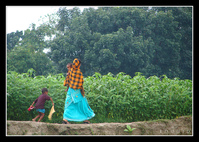
It took me a while to figure this out, but I don’t think I’m alone in this. On Sunday, after I had fed, dressed, and dragged three children to church--only to have one of them wildly run down the hallway screaming “NOOOOO!!!!” as I tried to deposit him in the nursery--I found myself talking with two friends who are also mothers of young children. I asked what they had planned for the day and the first said she was hoping that the ground beef had thawed out because she was going home to make dinner; the other had a sick husband and child, was juggling two other children, and trying to figure out how to attend a family funeral over two hours away.
But no on seemed to care. None of us seemed put out that our Mother’s Day was spent mothering.
Don’t get me wrong—we were all tired. We would have loved to have had breakfast in bed, a spa retreat, or even the day to ourselves. But somewhere on the road to becoming the mothers we were, we had learned something. As wonderful as those things are, they really aren’t the point. You don’t mother to be praised, you don’t mother to be rewarded, you don’t mother for the recognition. You mother because you love.
But unlike common wisdom, this love doesn’t magically appear when you hold your first child. No, becoming a mother that loves happens incrementally, it happens through the sleepless nights, the temper tantrums (yours and theirs), and shared joys. It happens through the daily grind, from changing out winter wardrobes for spring, and extracting chewing gum from baby-fine hair. And through it all, motherhood changes you—in the sacrifices, you become braver and in the loving, you become kinder.
My sister-in-law and I were talking about this a couple days ago—we’ve been friends since college, friends before husbands, friends before children. So we’ve seen a lot of changes in each others lives, and we definitively, undeniably agreed that being a mother has been the most excruciating, most productive spiritual exercise either of us had ever experienced.
I think it's because mothering forces you to recognize things about yourself that you’d rather not have known: your helplessness, your inconsistency, you selfishness. All in one typical day, you discover that you can't make the fever break, you can’t make this child obey you, you are feeding them chicken nuggets while reading the blog post telling you how terrible chicken nuggets are, and you routinely think about all the things you’d rather be doing than cleaning up poop.
And in these moments, you have to cry out for something bigger and better than your own ability to be a “good’ mother. You have to cry out to Him. You have to find His strength and His patience and His love. You have to have His courage and His determination in order to parent like He does.
And that is what changes you. He changes you. He uses this temporary relationship with your children to produce eternal and lasting joy. He uses it to make us like Himself. So that in the end, I don’t know if I can guarantee my children will be better people because of my mothering. But I do know this—mothering them has made me a better one.
Hospitality: Let Another Serve
I’m a bit of a martyr.
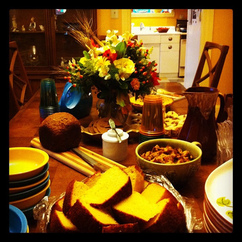
A church pot luck? If you ask me to sign-up for two dishes, I sign up for three and end up bringing four--just in case… Dinner at my house? Expect meat, three sides, rolls, several drink options, and dessert(s). And that’s when I’m rushed. Dinner at your house? I’ll show up with something, even if you assured me it wasn’t necessary.
I’ve always rationalized it by saying that I’m preparing for the “just in case.” Just in case, there isn’t enough food, just in case of allergies, just in case something goes wrong. Just in case. And while there’s nothing wrong with expecting the unexpected, I think that what I've really been doing is setting myself up to be the hero. If there is a lack of food, I’ll come to the rescue with my extra casserole and look down at my shoes very humbly and demurely say, “Oh, I just like to cook.”
And in the end, my “hospitality” can have less to do with others’ needs and more to do with mine. It’s hard for me to let someone else take the reigns. It’s hard to trust that everyone will do their part. It’s hard not to be the messiah.
Maybe you don’t struggle exactly this way. But I’d venture that if you’re human, you still find it difficult to graciously accept hospitality. Like a friend said to me a couple of months ago: “You know, I really appreciate other people helping us out, but I just get tired of being on the receiving end.”
The difficulty for most of us stems from our residual need to prove our worth. Whether we like it or not, we humans keep score—even in our good works—and when we fall behind, or perceive that we’re falling behind, we naturally want to prove our value and our ability to contribute. It’s not that we mind other people being gracious to us as long as we can eventually even the score. Errr,…. I mean “return the favor.” But when we can’t, when we’re not on the giving end, grace can actually begin to feel like a burden.
But what if, like most things, we’ve got it wrong? What if we were never meant to be the hero? What if being a guest was just as much an act of hospitality as being host? Because what if God not only modeled for us how to graciously give but how to graciously receive as well?
Think about it. Whenever God took on human form, you find Him in the most unexpected places. He’s not sitting on a throne, distributing his wealth, or bringing about world peace. No, often the King of the universe has strategically placed Himself in a position to be ministered to. Whether it’s through Abraham and Sarah in a dusty tent alongside the road or through Mary and Martha in the quiet refuge of their Bethany home, our God has made a point to teach us how to accept hospitality.
By humbling Himself to be a guest, He reminded us that receiving grace from another person is as much a part of the gospel as extending it. Perhaps more.
Because the reality is, when it comes to the gospel, none of us bring anything to the table, and none us of are meant to be the hero. The reality is that at that great final feast, at that long-awaited, heavenly wedding reception, we won’t even get to bring a side dish. All we are expected to do is respond to His invitation, wear our best clothes, and celebrate.
So maybe as much as hospitality means extending ourselves, it also means being a gracious guest and letting someone else serve. It means learning to humble ourselves, learning to relinquish our need to control, learning to be honestly grateful, and learning to follow our Host’s example. And it also means realizing that learning it now in this life is simply practice for the next.
Limitations

If you’re like me, you probably grew up with the notion that the sky’s the limit; if you can dream it, you can do it. You also learned that if you work hard enough, you can accomplish anything you set your mind to. It’s only ever a matter of commitment and discipline. And so in the end, we celebrate those who “achieve” success and judge those who cannot. We pride ourselves in our accomplishments and feel belittled and embarrassed when we fail.
But with each busy week, each passing year, each new frustration and disappointment, I’m learning that there is a lot I can’t control. That success and failure are not always a result of what I did or didn’t do. And that the underlying assumption that we control our destinies is an insidious lie.
Because at its root is the belief that we are God.
These last few weeks have reminded me that I am not. And in an odd way, coming face to face with my humanity has been incredibly freeing. Because when I finally accept my limitations, I’m able to embrace His lack of them. And when I accept that all my work is useless unless He works for me, I can finally rest.
Ultimately it won’t change the fact that I’ll continue to dream and work hard to pursue those dreams. It just means in doing that, I have the hope that making them a reality doesn’t depend on me. That it never did. Instead, pursuing my dreams means throwing myself on the mercy of the One who does control it all, has already saved the world, and gave me my dreams in the first place.
Joy

And I couldn’t help but wonder if this wasn’t exactly the same joy that God felt when He stepped back from creation and said “It is good.” A joy that He feels every time we praise Him for His work, a joy that He wants us to experience too.
I’m convinced that something very God-like (dare I say, "godly") happens when we create well and rejoice in each other's work. We are His children after all, made in His image. If He takes delight in creating well, why should we be surprised if when we use our gifts to praise Him and bless others, it results in undeniable and legitimate joy?
I think many of us are suspicious of this joy.
As a child, if you performed well, you were probably taught to defer praise, to offer it back in a stumbling returned compliment. If you worked hard and completed a project, you quickly learned to minimize the achievement. And so today, instead of simply saying “Thank you, I love what I do and it’s a privilege to serve you in this way,” we look down at our shoes and mumble obviously awkward phrases like “Praise the Lord” or “It was nothing.”
But what if God is a kind, heavenly Father who actually created us to take joy and delight in the work we do too? Who Himself takes joy in it?
Well, then, that is a joy not to be missed.
First Things
 I suppose it all began with one conversation too many, then a book with the perfect title, and an article about Weebly. Add to that, one very creative sister-in-law, a supportive husband and –BAM- I’m in over my head starting a blog. Actually for some time I’ve thought about blogging, but always came down on the safe side.“Really,” my practical self would counter my dreaming self, “how egotistical are you to believe that people actually want to read what you write?”*dreaming self hangs head in shame*
“Besides,” p. self continues “we’re talking commitment here, real down-in-the-trenches, day in, day out, when-the-going-gets-tough-the-tough-get-going commitment. Which both of us know we don’t have.”
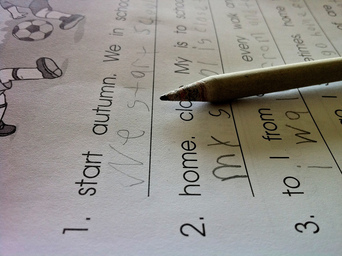
The turning point came one day when I was trying to get my daughter to complete a project for school. As is often the case, my emotions were in play, and I quickly extrapolated her failure to finish this assignment to a future of shattered dreams, unfulfilled expectations, and wasted talent. Always the dreamer, never the doer.
Truth is, that was probably more how I viewed myself than her.
Take that practical self.
So this blog is an experiment in following a dream to write, modeling commitment for my daughter, and desperately hoping not to fall flat on my face. You’re welcome on the journey and quite frankly it’d be rather lonely without you. I don’t claim to be exceptional or even always interesting - the title is “Sometimes a Light” after all. The best I hope for is that somewhere my passion and your needs will intersect, and when that happens, we’ll both be one step farther along to becoming what God intends us to be.